
Quick answer
Can a sulfur compound strengthen the body's muscle repair signal?
In laboratory experiments, a sulfur-based compound called lipoic acid trisulfide, or LASSS, raised hepatocyte growth factor's affinity for its receptor more than two-fold above the original, non-nitrated protein1. In mice, animals given the compound beforehand showed less of a chemical change that impairs that protein21. The findings come from laboratory work and animals, not from people2.
What is HGF and what does it do in muscle?
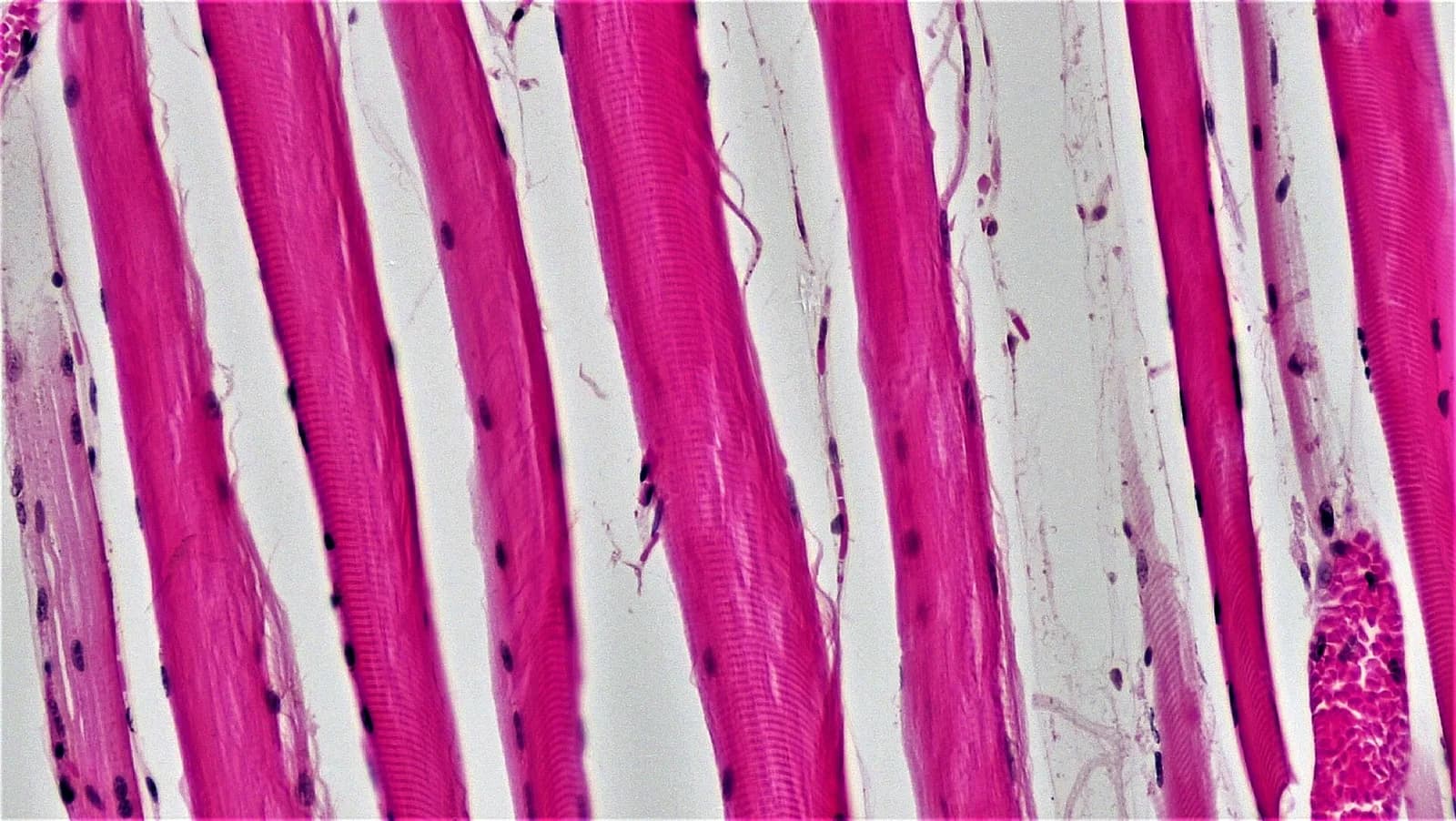
Hepatocyte growth factor, or HGF, is a protein that helps switch on the stem cells responsible for rebuilding skeletal muscle, the muscles attached to bones that allow walking, lifting and other voluntary movement2. Those stem cells, called satellite cells, usually rest inactive beside muscle fibers until a signal reaches them2. HGF is held in the supportive material around the fibers and can be freed when a muscle is injured or mechanically stimulated, for example by movement or stretching2. The protein then docks with c-met, a receptor that sits on the outer surface of those satellite cells, and this contact helps the resting cells awaken, multiply and take part in repairing damaged fibers2.
What did the compound do in laboratory experiments?
In findings published in Scientific Reports, the team compared two trisulfides, compounds whose structure includes a chain of three sulfur atoms linked together: glutathione trisulfide, or GSSSG, and lipoic acid trisulfide, or LASSS21. Both have strong antioxidant properties2. In the first experiments, each compound lowered nitration at the two sensitive sites on HGF, but blocking that chemical change did not fully restore the protein's capacity to reach c-met2.
The scientists then increased the amount of trisulfide relative to HGF, changing the molar ratio from 1:4000 to 1:80002. At the higher ratio, LASSS produced something the team had not predicted: after free compound was filtered out, HGF's affinity for c-met was more than two-fold higher than that of the original, non-nitrated protein, and the treated protein withstood nitration better at Y198 than at Y25021.
The compounds did not behave the same way, and the table below sets out what each set of experiments showed21.
| Compound | Where it was tested | What researchers observed | Source |
|---|---|---|---|
| LASSS | Laboratory, with HGF | Binding to c-met more than two-fold higher | 1 |
| LASSS | Laboratory, with HGF | Nitration at Y198 and Y250 reduced | 2 |
| LASSS | Mice, tail suspension | Less HGF nitration than in untreated mice | 2 |
| GSSSG | Laboratory, with HGF | Nitration reduced, binding not improved | 2 |
| GSSSG | Mice, tail suspension | No protective effect seen | 12 |
| Lipoic acid | Laboratory, with HGF | No gain in binding or nitration resistance | 1 |
How does nitration change HGF with age?
Earlier work by the same group found that HGF can acquire a nitro group at two tyrosine positions, Y198 and Y250, both inside the region that attaches to c-met21. Nitrated HGF is less able to connect with its receptor2. In rat muscle, the age-related increase in nitrated HGF appeared mainly on fast-twitch fibers1. Tatsumi said that HGF is not necessarily absent with age but can be altered chemically after it is produced, which prompted the team to ask whether a strong antioxidant might protect it2.
Loss of muscle is not confined to people in later life2. Being on bed rest for a long stretch, or going through any other period of low muscle use, can bring comparable changes, and reclaiming lost strength can be particularly hard once repair mechanisms are impaired2.
What did the mouse experiment show?
To learn whether the compound acted inside living tissue, the researchers used mice suspended by the tail, an established method for reducing normal weight bearing and reproducing some changes of prolonged inactivity2. Animals given LASSS before the procedure showed considerably less HGF nitration than untreated animals, while GSSSG again did not protect the protein21. The authors emphasize that this experiment demonstrated protection against nitration, not that lost muscle mass or physical strength came back2.
What is still being studied?
Stronger binding in laboratory experiments does not by itself establish that muscle regeneration improves, and more experiments are needed to learn whether the molecular change leads to better healing and strength2. Studies in aging animals are still required to establish the compound's effectiveness and safety within a living organism2. The authors also suggest the reaction with HGF may extend across species, raising the possibility of veterinary applications for older dogs and cats2. Whether LASSS can preserve muscle function during aging remains an open question2.
Frequently asked questions
Is this a treatment available to patients now?
No. The compound was studied in laboratory experiments and in mice, and the authors say studies in aging animals are still needed to establish effectiveness and safety in a living organism2.
What exactly is lipoic acid trisulfide?
LASSS is a trisulfide, a compound built around a chain of three linked sulfur atoms, and the researchers describe trisulfides as taking part in electron-transfer, or redox, reactions2.
Did the compound restore muscle mass or strength in the mice?
No result of that kind was reported; the mouse work showed protection against HGF nitration, not recovery of lost muscle mass or improved physical strength2.
Why is HGF important for muscle repair?
When HGF binds c-met on satellite cells, it helps wake those dormant stem cells so they can multiply and contribute to repairing muscle fibers2.