
Quick answer
What is osteoarthritis?
Osteoarthritis is the most common joint disease and is now more often described as a chronic whole-joint disorder rather than simple wear of the cartilage12. The joints most often involved are the knees, hips, hands, and feet, and osteoarthritis is the most frequent reason adults limit their activities1. Worldwide, an estimated more than 240 million people live with it1.
What happens inside a joint with osteoarthritis?
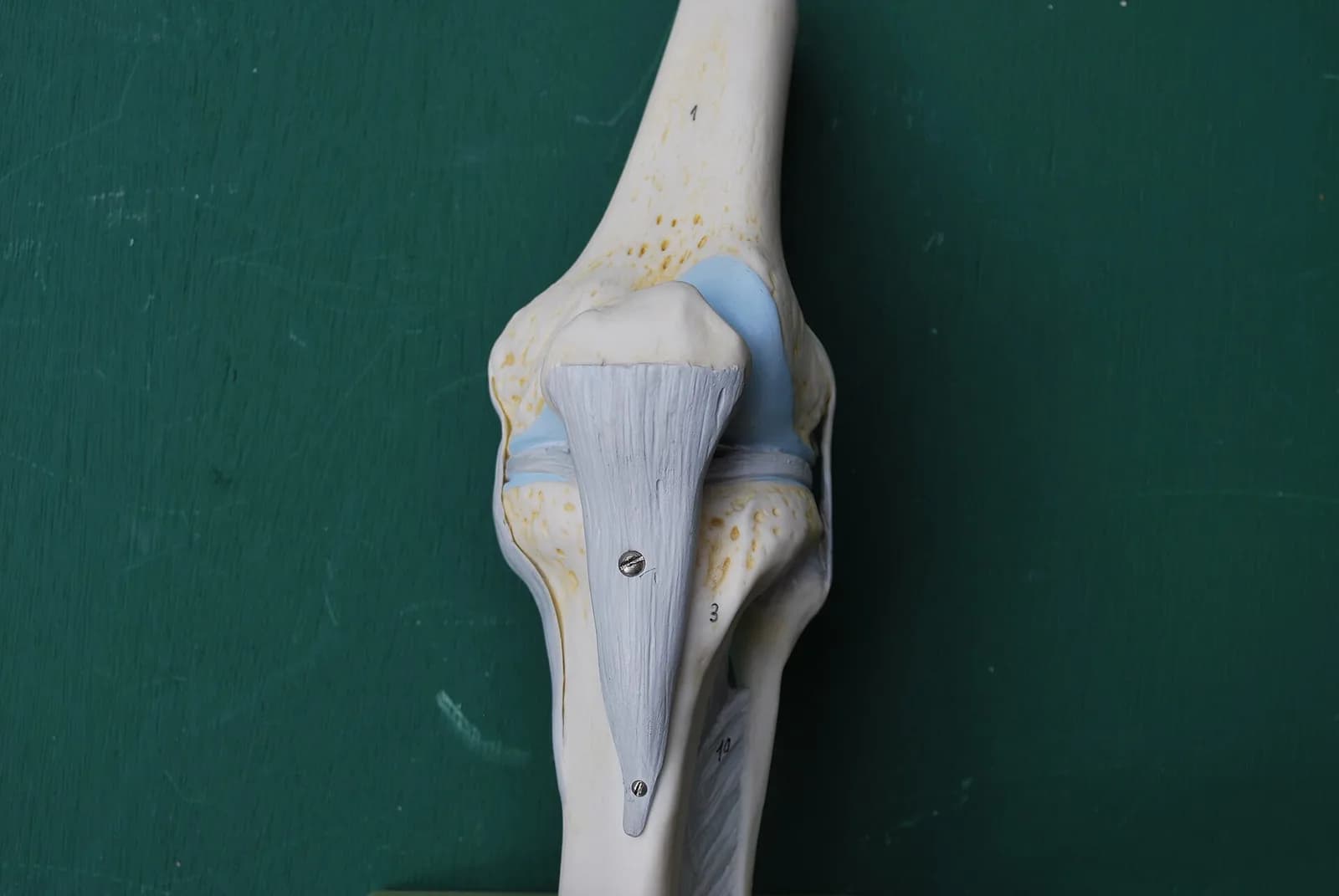
Healthy joints have a layer of smooth, slippery cartilage covering the ends of the bones, and that layer lets the surfaces glide past each other as the joint moves4. In osteoarthritis, the layer breaks down and turns rough, and in some cases it disappears entirely, so bone comes into contact with bone4.
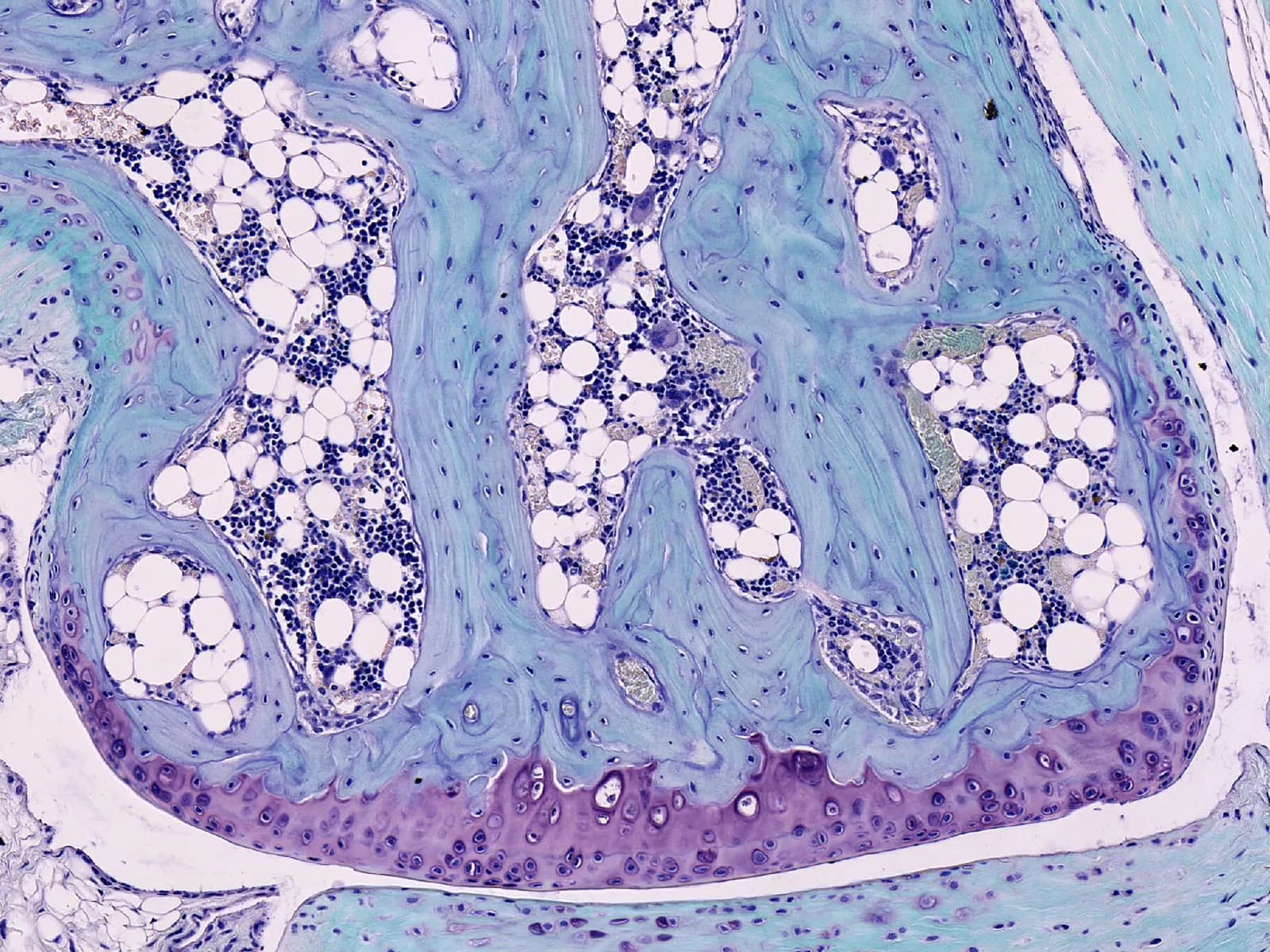
The changes reach beyond cartilage: bone, synovium, ligament, muscle, and the fat around the joint all show pathologic alterations, and together they produce joint dysfunction, pain, stiffness, and limits on activity1. Synovial inflammation is present in the osteoarthritic joint and has been associated with progression on radiographs and with worsening pain5.
Extra bone can form small growths known as spurs around the joint4. Researchers describe the process as beginning with biochemical and cellular alterations in the joint tissues, which produce structural change and eventually dysfunction of the whole joint2. The table below sums up what is reported for each tissue154.
Who is more likely to get osteoarthritis?
Certain factors are associated with a higher chance of osteoarthritis, and among the modifiable ones the strongest evidence concerns obesity and joint injury3. Age is one of them: 33 % of people older than 75 years have symptomatic and radiographic knee osteoarthritis1.
Reviews also name female sex and genetic factors1. Reference material adds an earlier injury to a joint or an operation on it, sports and activities that repeatedly overuse a joint, excess body weight, and a joint that does not line up correctly4. Once people pass age 50, the condition is more common among women than among men4.
The burden falls more heavily on older people, on women, on certain racial and ethnic groups, and on those with lower socioeconomic status, according to a review of osteoarthritis epidemiology3. People with osteoarthritis also tend to have more other medical conditions and to be more sedentary than people without it1.
Other possible factors are the subject of emerging evidence, including particular vitamins and diets, high blood pressure, metformin use, bone mineral density, joint shape and alignment, and lower muscle strength or quality3.
How do doctors diagnose osteoarthritis?
No single test confirms osteoarthritis4. A clinician takes a history of symptoms and medical problems, examines the joint, and may order x-rays or other imaging along with laboratory tests to rule out a different explanation for the symptoms4.
Some physical examination findings are useful, including bony enlargement in knee osteoarthritis and pain brought on by internal rotation of the hip1. On imaging, marginal osteophytes and narrowing of the joint space are the indicators clinicians look for1.
How is osteoarthritis treated?
Treatment usually begins with a combination of measures: exercise to build strength, flexibility, and balance, weight loss when it is appropriate, and braces or shoe inserts that a health care provider fits4. A JAMA review names education, exercise, and weight loss as the foundation of care, together with topical or oral nonsteroidal anti-inflammatory drugs1.
According to the same review, a steroid injected into the joint eases pain over the short term, duloxetine has shown efficacy, and opiates should be avoided1. When symptoms are advanced and the joint shows structural damage, a total joint replacement is the option the review describes as effective for pain relief1.
The table below summarizes how the sources describe several of these options14.
| Option | What is reported | Source |
|---|---|---|
| Education, exercise, and weight loss | Foundation of management | 1 |
| Topical or oral NSAIDs | Used alongside the foundation of care | 1 |
| Steroid injections into the joint | Eases pain over the short term | 1 |
| Duloxetine | Has shown efficacy | 1 |
| Total joint replacement | Described as effective for pain in advanced disease | 1 |
| Braces and shoe inserts | Fitted by a health care provider | 4 |
The same reference material notes that complementary options help some people: it describes massage as a way to boost blood flow and warm the area, and reports that some research indicates acupuncture may ease osteoarthritis pain4. Simple measures such as heat and ice can help too4.
What are researchers still studying?
Trials of compounds designed to slow structural progression, such as cathepsin K inhibitors, Wnt inhibitors, and anabolic growth factors, have shown promising results, as have trials of compounds aimed at osteoarthritis pain such as nerve growth factor inhibitors1.
No current treatment reverses osteoarthritis, partly because the mechanisms that start and drive the disease are not yet comprehensively understood2. Reviews have mapped signaling pathways including Wnt/β-catenin and NF-κB, along with regulators such as AMPK, mTOR, and RUNX2, as potential targets for drug development2.
Understanding the pathways involved in synovial inflammation could form the basis for stratifying patients and developing new treatments5. Researchers also emphasize that osteoarthritis is heterogeneous and are working to define its phenotypes3.
Reviews continue to track biological treatments and drugs being tested in clinical trials for osteoarthritis2.
Frequently asked questions
Is osteoarthritis the same as arthritis?
Osteoarthritis is the most common type of arthritis, and it affects the joints4. Reviews most often name the knees, hips, hands, and feet, while reference material also lists the neck and lower back among the joints it usually involves14.
Does osteoarthritis always cause pain?
Not everyone with osteoarthritis has pain, because the condition affects people differently4. Common symptoms include pain with movement that often eases with rest, stiffness that is most noticeable during the 30 minutes after rising from rest, swelling after heavy use, reduced range of movement, and a joint that feels unstable or loose4.
Can osteoarthritis be reversed?
No current treatment reverses osteoarthritis, and it generally progresses gradually, but a great deal can be done to manage the symptoms4. Reviews note that a full understanding of how the disease begins and advances is still lacking, which is one reason no such treatment exists2.